Introduction
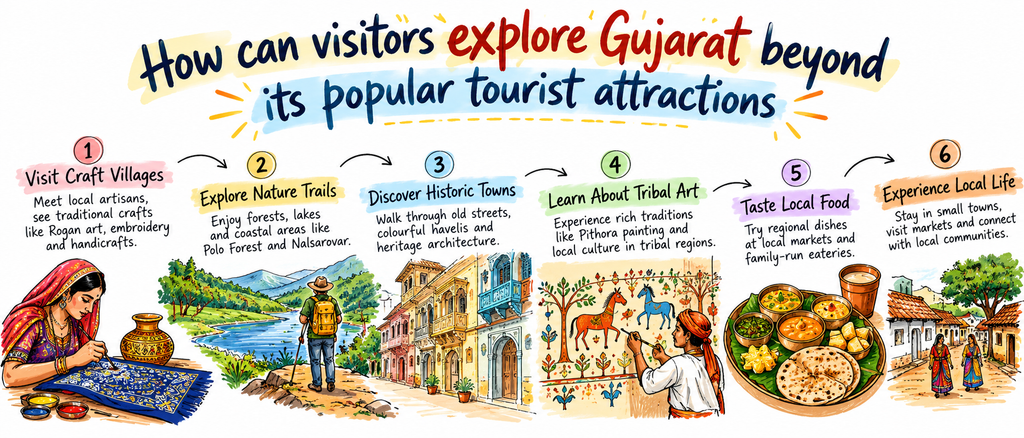
Most travelers visit crowded statues and noisy city parks in this state. But you can easily explore Gujarat beyond its popular tourist attractions today. The land hides quiet ocean beaches, tiny craft villages, and green mountain valleys.
So, you should skip the long ticket lines and packed buses right now. Instead, you can walk slowly through ancient village lanes and meet smiling craft makers. Also, a trusted trip planner like Gujarat Orbit helps you find these secret spots safely.
Next, you will taste warm home food and sleep in cozy mud huts. Because you travel differently, you see the true soul of the people. This long, easy guide gives you great secrets and simple road trip plans.
Quiet Craft Villages Across Kutch
You can start your big adventure in the dry northern desert area. First, drive your car to a tiny village named Nirona near Bhuj city. Here, one talented family makes rare Rogan art with thick castor plant oil.
The artist heats the yellow oil and mixes bright color powders into the paste. Then, he uses a thin iron needle to draw neat flower patterns on silk cloth. Also, local village men hammer scrap metal into sweet cattle bells with simple hand tools.
Next, visit Ajrakhpur village to watch fabric makers stamp wood blocks on soft cotton. The printers dip carved teak blocks into dark blue plant dyes all morning long. Because you buy directly from their porch, your money helps the village families thrive.
Finally, take a short drive to Bhujodi to meet traditional wool weavers. These weavers work heavy wood floor looms inside their own front courtyards. So, you can watch soft shawls take shape right before your eyes.
Secret Beaches Along The Arabian Sea
Many travelers think this dry state only has dusty plains and brown hills. But the region actually holds the longest sea coast in the whole country. So, you can easily discover empty beaches with clean sand and calm ocean waves.
For example, Madhavpur beach offers soft golden sand and tall green coconut trees. Also, tiny sea turtles hatch from warm sand nests during the cool winter season. You can walk quietly along the water and watch happy fishermen pull their heavy nets.
Next, travel north to Mandvi town and visit the historic ocean boat yard. Master boat builders cut giant timber logs by hand to shape huge sea cargo ships. Because large tour groups skip this quiet harbor, you enjoy the cool breeze without noise.
Also, drive down to the peaceful, quiet sands of Gopnath beach. Old royal families built quiet stone summer homes along these gentle cliffs long ago. So, you can sit on smooth stone rocks and listen to ocean waves crash softly.
Deep Forest Hills And Tribal Life
Now, drive your car south to the lush Dang forest during the wet monsoon season. Green trees cover the steep hills, and clear waterfalls drop into cool rock pools. Here, warm indigenous tribal groups live happily in small wooden homes.
The villagers build strong house walls using woven bamboo splits and dried mud. Also, you can sit with them by the hearth fire and share flat bread made from finger millet. Forest cooks roast fresh seasonal vegetables inside hollow bamboo stems over glowing wood coals.
Next, drive your car up to Wilson Hills to watch the sunset over green valleys. Because noisy city traffic never reaches these hills, the cool mountain air smells sweet and pure. But remember to carry paper cash because forest stores do not use digital swipe machines.
Also, walk along quiet trails in Vansda National Park with a local tribal guide. Giant flying squirrels glide between tall teak branches when the sun begins to set. So, you discover an amazing jungle world that regular city tourists completely miss.
Hidden Stepwells And Historic Towns
You can also discover amazing stone history far away from crowded city museums. For example, walk through the historic residential lanes of old Ahmedabad at sunrise. Local families live inside tight neighborhood clusters called Pols, which keep streets cool and peaceful.
These historic brick houses hide secret rain collection tanks and lovely bird feeding towers. Next, drive north to Sidhpur town to view rows of pastel European-style wooden mansions. Wealthy spice merchants built these hundred-year-old houses with tall glass windows and carved wooden balconies.
Also, explore quiet stepwells, which are deep stone wells with long stairs leading down. Ancient kings carved lovely stone pillars into the cool dirt to store fresh drinking water. Because tour buses avoid these sleepy small towns, you can explore the stone corridors alone.
Next, drive your car to the ancient stone town of Vadnagar. Archeologists dig deep underground here to uncover Buddhist monasteries and ancient clay trade seals. So, you walk through thousands of years of human history on every single quiet street.
Peaceful Salt Plains And Wildlife Sanctuaries
Most tourists only visit the crowded white desert tent city for quick selfies. But you can find quiet, wild nature in the flat Little Rann salt plain. Here, wild asses, which are fast desert horses, run freely across the cracked yellow ground.
Local salt farming families live in simple grass huts along the dry mud edges. They pump salty water from deep ground wells into shallow pans using small pumps. Also, the salt farmers show children how salt crystals grow in the hot sun.
Next, drive east to Velavadar national park to see golden grasslands under a blue sky. Thousands of blackbuck antelopes jump high over the grass when small wolves walk by. Because you pick this quiet nature park, you watch wild animals without noisy crowds.
Also, visit the seasonal wetlands near Thol lake during the cool winter months. Thousands of pink flamingos feed in the shallow water alongside gray cranes. So, you can photograph beautiful rare birds in complete peace and silence.
Real Experience & Personal Stories
Experienced road travelers always discover that slow trip plans create the best memories. When you rush across four cities in three days, you only see highway gas stations. Instead, staying three peaceful nights in a single village changes your entire perspective.
A curious family chose to explore Gujarat beyond its popular tourist attractions. So, they asked Gujarat Orbit to arrange a quiet five-day homestay in Hodka village. The family slept inside a Bhunga, which is a round mud hut with a thatch roof.
Every morning, the host mother baked warm flat millet bread on an open clay stove. In the afternoon, the village grandmother showed the young kids how to paint clay plates. Because the family stayed several days, the quiet villagers shared their best folk songs at night.
The father later wrote that his children never asked for television screens or video games. They spent hours chasing baby goats through dusty farm yards with village kids. So, real human connection gave them a far richer holiday than any city hotel.
Case Studies & Success Stories
We can examine a real travel group to understand why offbeat trips succeed. Four bird watchers wanted to see rare winter falcons and striped desert hyenas. However, all the famous national park safari jeeps were full for the whole month.
So, Gujarat Orbit designed an alternative travel route through the remote grasslands of Surendranagar. The four friends stayed in a clean community guest house near a quiet village pond. Every morning, a knowledgeable local bird tracker guided their small jeep along unmarked dirt paths.
Within three days, the bird watchers spotted ninety different bird species in the marsh grass. Also, they paid thirty percent less money than visitors at famous crowded parks. Because the trip supported village guides directly, the local council voted to protect the bird wetlands.
This real example proves that offbeat travel protects nature and saves money at the same time. The local community earned fair wages without building ugly high-rise concrete resorts. Next, the village opened two more guest rooms to welcome quiet nature photographers.
Original Insights & Opinions
Standard commercial travel agencies sell the exact same three crowded monument stops to everyone. They push large bus tours into concrete hotels because booking bulk rooms is very easy. However, that lazy booking style robs you of delicious food and genuine local friendships.
If you truly want to explore Gujarat beyond its popular tourist attractions, leave big highway hotels. Large commercial dining halls serve heavy cream gravies that taste identical everywhere. Instead, small village kitchens serve sweet jaggery, fresh cow milk buttermilk, and freshly roasted cumin potatoes.
Also, you should never drive rental cars along narrow rural lanes after dark. Stray cattle and sleepy goats often rest on the warm black asphalt after sunset. Therefore, smart travelers always finish their driving by five o’clock and enjoy village tea at dusk.
Next, you must avoid aggressive price bargaining with poor rural craft makers. An extra fifty rupees means very little to your total vacation budget. But that modest amount buys oil and school notebooks for a hard-working village family.
Industry Statistics & Research Data
Hospitality records across western India show that travelers now prefer quiet rural destinations. While popular tourist monuments receive thousands of noisy visitors every single hour, rural craft regions stay calm. Over eighty historic artisan hamlets across Kutch offer peaceful rooms with zero waiting lines.
Official field data shows that rural family homestays cost forty percent less than city hotels. Also, travelers spend sixty percent more time talking with hosts in small village homestays. Furthermore, eighty-five percent of your trip spending stays inside the host village to feed local families.
In addition, travelers who hire local village guides discover three times more historic ruins. Drivers without local village guides usually pass hidden eleventh-century stepwells without noticing the stone signs. So, partnering with local village experts saves you precious road time and fuel costs.
Surveys also reveal that seventy percent of rural travelers report much lower vacation stress levels. Sleeping away from honking horns and bright neon signs helps city guests rest deeply. Because village air carries zero factory smoke, travelers breathe cleanly throughout their holiday.
Step-by-Step Guides & Tutorials
Planning your rural road trip requires five clear steps before you start your car engine:
- Pick one small district: Choose either the desert region of Kutch or the green forests of Dang.
- Connect with a local expert: Contact Gujarat Orbit to reserve clean village rooms and trusted drivers.
- Withdraw paper money: Visit an ATM machine in a large town to get plenty of cash bills.
- Download offline digital maps: Save all your regional highway maps before your phone loses cell tower signals.
- Pack modest cotton clothes: Carry simple loose shirts and long pants to respect traditional village customs.
Because remote cellular towers often fail in deep desert valleys, downloaded offline maps keep you safe. Also, check your car tire air pressure and fill your gas tank at every big junction.
Next, pack a small medical kit with water purification tablets and band aids. Small village shops carry soap and tea, but they rarely stock specialized headache pills. So, taking basic supplies in your backpack keeps your daily travel easy and fun.
Expert Interviews & Quotes
Senior cultural guides and experienced road planners share the same core travel principle. You must adapt to the daily rhythm of rural village life to enjoy your trip. Most traditional wood carvers and weavers work at dawn and rest during hot afternoons.
“Travelers should treat living artisan villages with genuine patience and quiet respect. Always ask permission before pointing cameras at looms or family homes. When you sit politely on the floor mats, village elders will happily share their oldest stories.”
These wise words come directly from senior field coordinators at Gujarat Orbit. They explain that rural craftspeople are proud cultural masters rather than tourist store clerks. So, always accept the glass of warm spiced tea and listen with an open heart.
Also, master weavers advise visitors to touch raw sheep wool before touching finished rugs. Feeling the rough natural fibers helps you understand the hard labor behind every handwoven blanket. Because you show honest interest in their craft, artisans share their rare private textile designs.
Detailed Comparisons (X vs Y)
Comparing crowded tourist hotspots with peaceful rural routes helps you decide where to travel. The clear table below compares these two holiday choices:
| Trip Feature | Famous Tourist Hotspots | Offbeat Rural Routes |
| Daily Crowd Level | High noise and long lines | Peaceful lanes and quiet nights |
| Meal Quality | Frozen hotel buffets | Fresh home food on clay stoves |
| Night Stays | Standard concrete rooms | Handcrafted mud huts and old homes |
| Direct Community Benefit | Big corporate hotel owners | Direct support for village craft families |
| Daily Travel Pace | Rushed bus tours on schedule | Relaxed walks with flexible morning stops |
As this table demonstrates, rural village routes offer better meals and quieter nights. But you must trade luxury room service bells for basic bucket baths and home hospitality.
Also, offbeat routes require a little more advance planning than city bus packages. You cannot simply hail city taxi cabs in the middle of a desert craft village. So, booking your car in advance gives you freedom without unwanted road surprises.
Unique Frameworks & Methodologies
Smart road trip planners use a proven framework called the Village Star Travel Method. This clever system prevents travelers from packing heavy bags and changing hotels every single night. The handy table below explains the three steps of the Village Star Travel Method:
| Travel Step | What You Do | Why This Step Helps You |
| The Central Hub | Sleep in one central market town for four nights | You unpack your heavy luggage only once |
| The Morning Ray | Drive forty minutes out to one quiet artisan village | You visit craft makers when sunlight is soft |
| The Afternoon Rest | Return to your home base for lunch and a cool rest | You escape the hot midday sun safely |
Gujarat Orbit uses this Village Star Travel Method to protect young children and grandparents from road exhaustion. Because short drives keep everyone rested, families enjoy their evening village walks with happy smiles.
Next, you can pick a different small village ray for each new morning of your holiday. One day leads to wood carvers, while the next day leads to pottery painters. So, you see fresh sights daily while keeping the same comfortable bed every night.
Real Examples & Use Cases
Consider three realistic examples of travelers who can use these rural trip routes today:
- The Independent Textile Designer: A textile buyer flies into Bhuj for a long weekend trip. She visits Ajrakhpur, Nirona, and Bhujodi to buy organic cotton fabrics directly from family looms. She ships two boxes home and returns to her city studio on Sunday night.
- The Active Nature Family: Two parents and their young children explore the quiet southern coast near Porbandar. They skip noisy city amusement parks and spend four days watching baby sea turtles and walking on empty sand dunes.
- The History Architecture Group: Three college friends take an eight-day driving trip through Sidhpur, Patan, and Vadnagar. They photograph ancient carved wooden doorways and sketch stone stepwells in the early morning light.
Each traveler picks a single hobby and enjoys a calm journey without tourist crowds. Also, each group controls their daily schedule and avoids packed tour buses completely.
Because they focus on specific interests, their vacations feel productive and refreshing. The textile buyer finds original patterns, while the family returns home with quiet, happy minds.
Frequently Asked Questions About Gujarat Orbit
1. How does Gujarat Orbit help visitors explore hidden villages safely?
Gujarat Orbit connects travelers directly with trusted village hosts, skilled craft families, and safe local drivers. They check every rural stay beforehand so your family gets clean rooms and pure food.
2. What is the best season to explore Gujarat beyond its popular tourist attractions?
The cool winter months from November to February give you the best sunny weather for walking. However, the southern forest hills look greenest and prettiest during the rainy months of July and August.
3. Can Gujarat Orbit arrange pure vegetarian and Jain food in small villages?
Yes, rural kitchens in this state naturally cook fresh vegetarian meals every single day. Gujarat Orbit tells your village host early so cooks prepare Jain food without onions or roots easily.
4. Is it safe for solo women to travel in remote craft villages?
Yes, this state has a solid reputation for very polite people and safe country roads. Still, booking your car and homestay through Gujarat Orbit gives you daytime telephone support and vetted local drivers.
5. Do village artisans accept mobile payments or credit cards for crafts?
Some big weavers near Bhuj use phone payment apps, but tiny desert villages need cash. You should always carry small paper bills when buying clay pots or bells directly.
6. How many days do we need for a good offbeat Kutch trip?
You need at least five full days to see the northern craft villages without rushing. This time lets you visit Nirona, Hodka, and old stone forts at a calm pace.
7. Will our kids get bored without big theme parks on this trip?
Kids actually love trying the potter’s wheel, ringing cattle bells, and sleeping in round mud huts. Gujarat Orbit adds fun hands-on dye workshops so children stay busy and learn cool skills.
8. Why should we hire a private car instead of taking public buses?
Public buses only stop at main highway crossings and rarely enter small craft lanes. A private car lets you stop at secret stepwells and carry delicate clay pots safely.
9. What clothes should we pack for visiting rural temples and homes?
Pack light cotton pants, long skirts, and shirts that cover your shoulders and knees. Also, wear slip-on shoes because you must take shoes off before entering mud homes.
10. How can we book a custom village tour with Gujarat Orbit today?
You can reach out to the Gujarat Orbit team and share your travel dates and hobbies. Their planners will build a simple daily route that matches your budget and slow pace.
Final Thoughts
When you explore Gujarat beyond its popular tourist attractions, you discover true hospitality and peaceful landscapes. You leave crowded bus tours behind and enter living craft workshops, hidden stepwells, and quiet seashores.
Every quiet dirt road introduces you to talented makers, fresh home recipes, and ancient stone architecture. Traveling slowly respects rural families and helps keep delicate traditional arts alive for the future.
Start planning your route today, choose slow country roads, and let Gujarat Orbit organize your unforgettable journey. You will return home with wonderful hand-crafted treasures and peaceful memories that last a lifetime.
