Introduction
A history trip feels richer when you understand what you see. A deep well becomes more than a photo spot. An old street becomes a place where families shared work, water, and daily life.
Gujarat offers many chances to explore these stories. You can walk through old Ahmedabad, visit Gandhi’s ashram, or study stone carvings. You can also explore ancient towns and learn how people saved water.
The best historical experiences in Gujarat suit different interests. Some visitors enjoy art and faith. Others prefer old homes, town plans, or stories of peaceful change.
However, a useful trip needs more than a list of famous places. You need a clear route, enough time, and a few good questions.
This article explains the main experiences step by step. It also helps you plan travel, compare options, and avoid rushed visits.
Gujarat Orbit can help you explore local events that may fit your route. Then, check the details with the event host and each site before travelling.
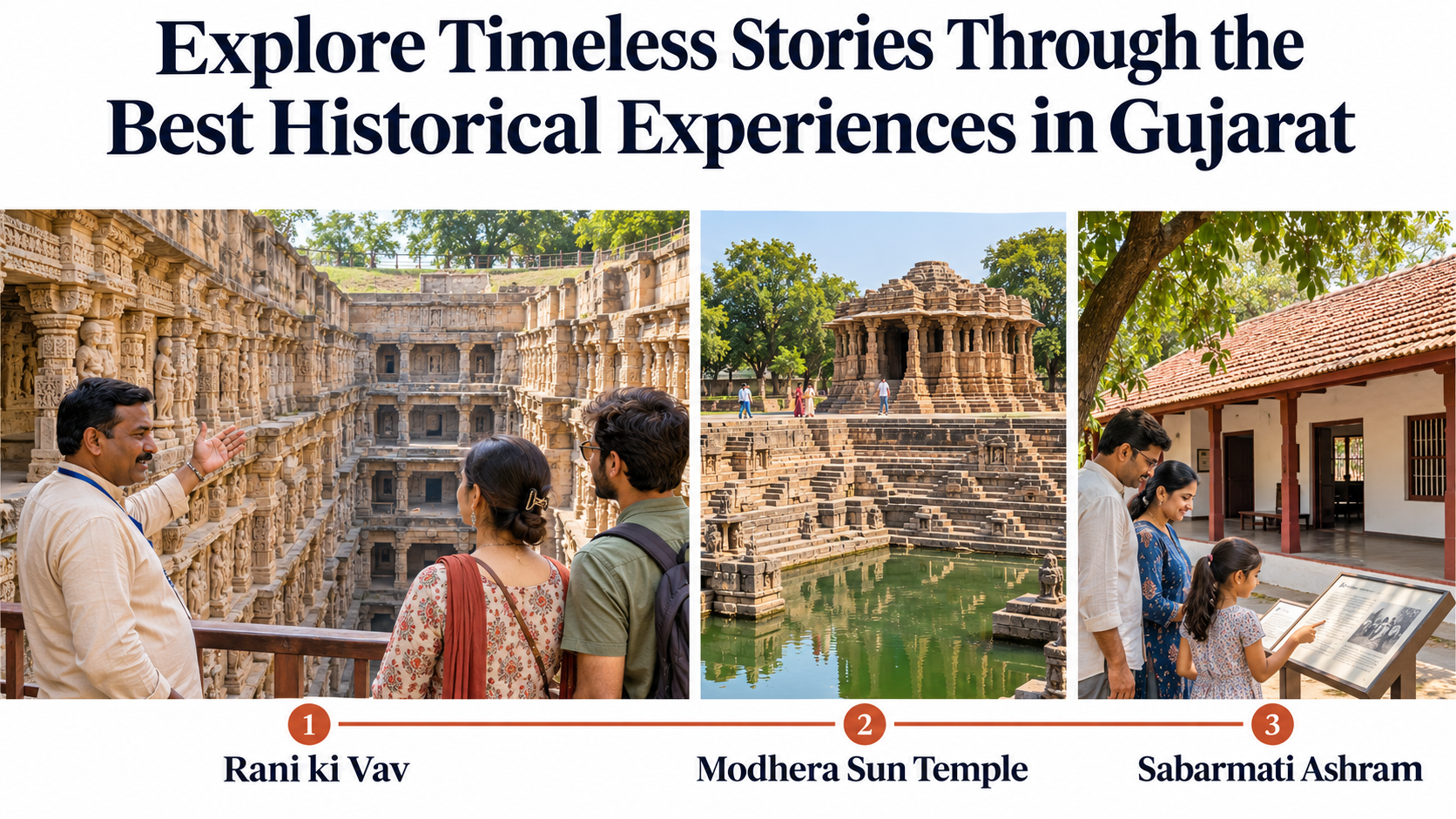
1. Explore Old Ahmedabad and Sabarmati Ashram
Ahmedabad offers two different ways to connect with the past. Its old city shows shared daily life. Sabarmati Ashram brings you closer to Gandhi’s ideas and work.
Start with a walk through the old city. Look for carved wooden homes, narrow lanes, bird feeders, and shared spaces.
You may hear the word pol during your walk. It means a close group of homes along small streets.
First, choose a walk with a clear meeting point and route. Ask how long it lasts and whether it includes steps.
Next, look beyond the main buildings. Notice doors, windows, shaded corners, and the way homes stand close together.
Also, remember that people still live here. Keep entrances clear and ask before taking close photos of residents.
Then, visit Sabarmati Ashram as a separate part of your day. Gandhi and Kasturba lived here beside the river.
The ashram also marks the starting point of Gandhi’s Dandi March. Its displays help explain his life through letters, photos, and objects.
Choose a few displays and read them carefully. For children, discuss simple ideas such as fairness, truth, and peaceful action.
Finally, compare the two visits. The old city shows life within a community. The ashram helps you explore choices that shaped a wider movement.
2. Understand Water and Stone Art at Rani ki Vav
Rani ki Vav in Patan brings together water storage, faith, and fine stonework. It is a stepwell, which means a deep well with stairs.
A quick visit may leave you with a striking photo. A slower visit helps you understand the purpose behind its design.
First, view the site from the visitor path. Notice how the stairs and carved walls lead down through several levels.
Next, study one small group of figures. Look at their poses, clothes, faces, and the patterns around them.
Ask a guide to explain one scene clearly. A short, focused story can help you remember more than a long list of names.
Then, think about the well’s practical role. Ask how people once reached water and how the design supported that task.
Follow all barriers and staff directions. Visible steps do not always mean visitors can use them.
Also, keep children close near edges and changes in level. Avoid leaning over barriers for a better photo.
If anyone finds stairs difficult, ask about the available viewing areas before arriving. Do not assume that every visitor can follow the same route.
Finally, connect the visit to life today. Water still shapes where people live and how towns grow.
3. Read the Stone Details at Modhera Sun Temple
Modhera Sun Temple honours Surya, the Sun God. Its halls, carved pillars, and stepped water tank offer much to explore.
First, find a spot where you can see the main parts together. Notice the space between the tank, open hall, and shrine.
This broad view helps you understand the layout. Then, move closer to study the small details.
Look at the pillars and the carved figures around them. Notice repeated shapes and the care within each pattern.
Next, ask your guide to explain the purpose of each main area. Simple answers can make a large site easier to understand.
Also, watch how light falls across the stone. Shade can make some carvings easier to see.
Keep your visit respectful and follow marked paths. Do not climb onto old features to pose for photos.
Patan and Modhera can form a north Gujarat outing. However, the plan depends on your starting point, transport, and pace.
Arrange the return journey before setting out. Also, leave room for a proper meal and rest stops.
If your group enjoys detailed stonework, avoid adding too many other places. These two stops deserve time for close viewing.
Finally, compare their use of water. Rani ki Vav centres on a deep well, while Modhera includes a stepped tank.
4. Explore Ancient Town Planning at Dholavira
Dholavira in Kutch offers a different kind of history experience. Here, the main story lies within the remains of an ancient Harappan city.
You will need to picture how people once used the spaces. A site plan and a clear guide can help.
First, study the map before walking far. Find the main streets, gateways, and water storage areas.
Next, choose a manageable route. Walking without a plan can make separate stone remains hard to understand.
Ask how the city collected and stored water. This question gives the visit a clear theme.
Then, look for links between the land and the town’s design. Think about how people lived with limited water.
A guide can also explain craft work and trade. However, ask which ideas come from finds and which remain uncertain.
Plan Dholavira within a Kutch trip. Avoid treating it as a quick extra stop from a distant city.
Arrange transport, meals, water, and a place to stay if needed. Also, check local weather before the journey.
Wear suitable shoes and carry sun cover. Follow marked routes and leave stones or objects where they lie.
Finally, take a short break to review the town plan again. The map may make more sense after your walk.
5. Discover the Wider Landscape of Champaner-Pavagadh
Champaner-Pavagadh brings together historic buildings, old remains, hills, and living places of worship. The whole area needs more planning than a single monument.
First, decide which experience matters most to your group. You might focus on buildings, the hill setting, or religious visits.
Next, choose a small number of stops. Do not assume that every place lies beside the same entrance.
Ask about walking distance, steps, and transport between areas. Also, check the effort involved in any hill visit.
If you travel with children or older relatives, plan regular breaks. A shorter route can still offer a rich experience.
Then, study one building closely. Look at its pillars, openings, carved details, and use of space.
Ask your guide how different sites relate to each other. This helps you understand the area as a wider landscape.
Respect worshippers at active religious places. Follow local dress rules and ask before taking photos inside.
Also, avoid making tight plans for the rest of the day. Travel and walking may take longer than you expect.
Finally, review what you learned about the place. Try to explain the link between its buildings, land, and living traditions.
Real Experience & Personal Stories
A meaningful travel story often begins with one small detail. You may remember a carved face more clearly than a whole building.
So, keep a simple travel note during your trip. Write down one thing you noticed and one fact you learned.
Next, record a question that you still want to explore. This gives your visit a life beyond the travel day.
You can also speak with guides, local shopkeepers, and residents. However, ask politely and respect anyone who prefers not to talk.
Seek permission before recording someone’s voice or sharing their photo. Their daily life deserves care.
When you write about your visit, separate facts from feelings. Explain what you saw, what a guide said, and what you personally thought.
This article does not claim a personal visit. These steps help you build your own honest travel story.
Case Studies & Success Stories
The following sample plans show how clear choices can improve a trip. They describe possible visits, rather than real customer results.
A family with young children chooses Ahmedabad’s old city and Sabarmati Ashram. They keep the walk short and allow a long lunch break.
Their goal is simple. Each child should remember one story and one object.
A traveller who loves carvings chooses Patan and Modhera. They arrange transport and spend more time viewing stone details.
Their goal is to understand the purpose behind the art.
A visitor exploring Kutch gives Dholavira its own space in the route. They plan water, meals, and the return journey early.
Their goal is to understand the ancient town without rushing.
Each plan defines success through learning and comfort. A longer checklist would not always improve the day.
Original Insights & Opinions
Choose a history trip around a question. This gives separate places a shared meaning.
For example, explore how people managed water. Rani ki Vav, Modhera, and Dholavira offer different views of this theme.
You do not need to visit them on one trip. Instead, connect the ideas as you travel through each region.
Another useful theme is shared life. Ahmedabad’s old streets can show how homes and public spaces worked together.
My recommendation is to spend longer at fewer stops. Close viewing often teaches more than a crowded route.
Also, match the trip to your group’s real interests. Someone who loves Gandhi’s story may enjoy the ashram more than several temple stops.
A good route serves the traveller. It does not need to include every famous name.
Industry Statistics & Research Data
Reliable facts can deepen a visit without filling it with numbers. Use figures to explain a place, rather than to make it sound grand.
For example, UNESCO describes Rani ki Vav as a design with seven levels. It also records more than 500 main sculptures.
These figures show the scale of the work. However, they do not mean visitors can reach every level.
UNESCO also recognises Ahmedabad’s historic city, Dholavira, and Champaner-Pavagadh as World Heritage Sites. This highlights their value beyond the local area.
Still, heritage status does not guarantee easy access or the same services everywhere.
Before travelling, check current entry rules and available facilities. Treat claims about visitor growth or popularity carefully unless clear research supports them.
Step-by-Step Guides & Tutorials
Use these steps to turn your interest into a practical trip.
Step 1: Pick one main interest.
Choose old streets, Gandhi’s life, stone art, water systems, or ancient towns. This choice helps you avoid adding unrelated stops.
Step 2: Select one region.
Start with Ahmedabad, north Gujarat, the Vadodara area, or Kutch. Nearby stops usually make a calmer short trip.
Step 3: Build a realistic daily plan.
Include travel, meals, queues, walking, and rest. Leave spare time rather than filling every hour.
Step 4: Confirm site access.
Check opening hours, ticket rules, closures, and entry points. Also, ask about toilets, seating, and steps.
Step 5: Arrange transport.
Confirm the pickup point, return plan, and full fare. Ask whether parking, tolls, or waiting time cost extra.
Step 6: Choose a guide if useful.
Agree on the language, fee, route, and length. Share any needs before the visit starts.
Step 7: Plan your full budget.
Count travel, entry, guides, meals, parking, and any hotel stay. Keep a small spare amount for changes.
Step 8: Pack for the route.
Bring water, sun cover, suitable shoes, and important contact details. Keep bags light for long walks.
Step 9: Recheck before leaving.
Review weather and local travel updates. Confirm bookings and save the meeting point.
Step 10: Review after the visit.
Write three things you learned. Then, choose one idea to explore further at home.
Expert Interviews & Quotes
A good guide should make history clear without turning every story into a proven fact. Ask where the evidence comes from.
For Dholavira, UNESCO describes a “sophisticated water management system.” In simple terms, people carefully planned how to collect and store water.
Use that idea to ask better questions. Find out where water entered and how the town kept it for later use.
At a carved monument, ask which details help experts understand its past. Also, ask which parts workers have repaired.
This article includes no private expert interview. However, these questions can help you learn more from a real guide.
Clear explanations matter more than a fast speech full of unfamiliar names.
Detailed Comparisons: Guided Visits vs Exploring Alone
Both approaches can work well. The right choice depends on your knowledge, budget, and interest.
| Choice | Main benefit | Main limit |
|---|---|---|
| Guided visit | Clear stories and help with details | Extra cost and a shared pace |
| Exploring alone | Freedom to pause or change direction | More work to understand the site |
| Guided start, then free time | Background plus time for close viewing | Needs a clear plan with the guide |
Choose a guide when the remains seem hard to read. Dholavira may feel richer when someone explains the town plan.
Explore alone when you prefer quiet viewing and clear signs meet your needs.
Also, remember that a guide cannot promise access to closed areas. Agree on the route before paying.
Unique Frameworks & Methodologies
Try a simple method called Look, Ask, Connect, Remember. It works well for adults, children, and school groups.
Look: Choose one feature. It might be a water channel, carved pillar, wooden door, or letter.
Ask: Find out who used it and what purpose it served. Read a sign or ask a guide.
Connect: Link it with life today. Compare old water storage with the way your town saves water.
Remember: Write one clear sentence about the feature. Use your own words rather than copying a sign.
Repeat this method a few times during the visit. You do not need to study every object.
This keeps learning active without making the outing feel like an exam.
Real Examples & Use Cases
Use these sample plans as starting points. Adjust them to your hotel location, travel pace, and site access.
| Your situation | Suggested focus | Planning priority |
|---|---|---|
| One day in Ahmedabad | Old city and Sabarmati Ashram | Walk, meal break, and local travel |
| A full north Gujarat day | Patan and Modhera | Confirmed transport and return time |
| Staying near Vadodara | Selected Champaner-Pavagadh stops | Walking effort and site choice |
| Travelling through Kutch | Dholavira | Travel time, water, and meals |
| Visiting with a school group | One place with a clear theme | Supervision and simple learning tasks |
Gujarat Orbit can help you explore local events alongside your history plans. Its listings may offer another way to enjoy the area.
However, check each event separately. Confirm the host, venue, time, and any entry costs.
Do not assume that an event ticket includes transport or monument entry.
Common Mistakes That Can Spoil the Visit
The most common planning mistake is adding too many distant stops. This leaves little time to learn or rest.
Another mistake is treating every site as equally easy to walk. Steps, uneven ground, and open areas can change the effort.
Also, avoid booking transport without a clear return plan. A low starting fare may leave out waiting time or other charges.
Do not rely on one old travel post for opening hours. Check current details before leaving.
Finally, avoid viewing every place through your phone. Take a few photos, then pause and look directly.
A careful visit gives you more to remember than a large photo folder.
Frequently Asked Questions About Gujarat Orbit
1. What is Gujarat Orbit?
Gujarat Orbit lists events across different categories. You can explore listings that may fit your travel plans.
2. Can Gujarat Orbit help with a history trip?
It can help you discover local events. Check whether any listed activity matches your history route.
3. Does Gujarat Orbit run every listed event?
Check the named host. Do not assume that the platform itself runs each event.
4. Can I book all monument tickets through Gujarat Orbit?
Do not assume this. Read the exact offer and confirm what the booking includes.
5. Which historical experience suits a first visit to Gujarat?
Ahmedabad offers a useful starting point. You can explore old streets and visit Sabarmati Ashram within the same city.
6. Can I cover all these places during one short trip?
A short trip needs a smaller route. Dholavira, Ahmedabad, Patan, and Champaner-Pavagadh do not form one compact sightseeing area.
7. Can children enjoy historical experiences in Gujarat?
Yes. Choose short walks and simple themes. Ask children to spot one detail and explain it in their own words.
8. Are these visits suitable for older travellers?
Suitability depends on the exact route. Ask about steps, seating, walking distance, and toilets before making plans.
9. What should I confirm before booking a guided tour?
Check the route, language, group size, total fee, and refund terms. Also, ask whether transport and entry cost extra.
10. Where should I check current opening hours and entry rules?
Contact the site office, an official tourism service, or your confirmed tour host. Recheck before travelling.
Final Thought
Give each place enough time to tell its story. A well-planned history trip can feel calm, thoughtful, and full of discovery.
Start with one region and a theme you enjoy. Then, choose stops that match your time and walking comfort.
Use Gujarat Orbit to explore events that may add to your visit. Confirm the practical details before paying or travelling.
Most of all, stay curious about the small things. A doorway, well, letter, or stone channel can reveal a much larger story.
